What Is a Training Bib For?
A training bib helps players spot teammates quickly; learn how contrasting colors and simple handout routines keep practice groups clear and flexible.
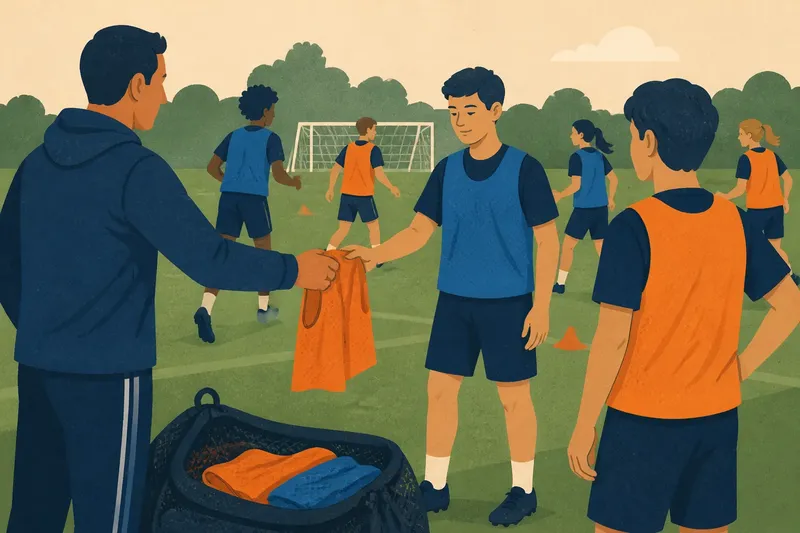
What is a training bib for when everyone already knows the players on the field? A training bib makes group membership visible at a glance, so players can tell who is on their side without stopping to ask. In a busy practice, that small cue can make a drill easier to follow and easier to change.
Also called a scrimmage vest, pinnie, or practice vest, a bib is a lightweight layer worn over a shirt. Its main job is not to mark rank or ability. It gives a group a shared visual signal: these players are together for this activity.
Make teams visible
Coaches often divide players into contrasting colors for small-sided games, possession drills, or practice scenarios. If one group wears blue bibs and another wears orange, a player can scan the field and identify teammates before choosing where to pass or move. The colors do the sorting work that names or verbal reminders would otherwise have to handle.
That clarity can help newer participants, too. Someone learning teammates’ names may still recognize the color group, while a player joining late can understand the current arrangement with a quick look. Bibs are particularly useful when practice groups change often, because the signal can change faster than players can memorize new lineups.
Think of a bib like a colored folder on a shared table: it does not change what is inside, but it makes the right group easier to find. The color is a temporary label, not a judgment about who is more skilled or important.
Choose useful contrast
The most useful bib colors are easy to tell apart in the actual setting. Two shades that look distinct indoors may blend in under bright sun, against a field’s background, or beneath a gym’s lighting. When selecting a set, consider the shirts players will wear underneath and the colors already present in the venue.
Teams can also reduce confusion by pairing color with a second cue. For instance, one group might wear bibs while the other plays without them. In a larger practice, groups can use visibly different colors, or a coach can assign a simple role within each color group, such as defender or target player. These extra cues are most useful when players have trouble distinguishing shades or when several activities share the same space.
Fit matters because a bib should stay put without distracting the wearer. A loose vest that catches on an arm or shifts over the face can interrupt movement; a tight one can feel uncomfortable over a warm-up layer. Look for a cut that allows normal running and reaching, and check that the fabric is comfortable against the clothing worn underneath. Follow the maker’s care and sizing instructions, since materials and designs vary.
Organize the handout
There are several simple ways to manage bibs, and the best choice depends on how often a group changes teams. A fixed color assignment is easy to remember: one side takes one color, and the other side takes another. It suits a session with stable groups, but can make the same people feel permanently linked to one side if used without variation.
A rotating assignment makes the color a neutral tool. Players collect a bib as they arrive, or the coach hands them out for each activity, then everyone returns the vests before the next grouping. This keeps teams flexible, though it helps to have a clear place for the bibs so players are not searching for them while the session is underway.
For a small group, a simple pile of each color may be enough. For a larger session, a mesh bag or separate labeled sacks can keep colors from becoming mixed. If a drill needs several groups, the coach can set out only the colors needed for that activity rather than handing out the full collection in advance.
Say you are running a practice with a few late arrivals and want to split players into two groups. You hand out contrasting bibs at the start, then give the new arrivals whichever color has fewer players. The visible groups become more balanced without asking everyone to stop and recount their teammates.
Handle changes smoothly
Bibs are most helpful when players know what a color means right now. Before a drill begins, state the assignment in a short sentence: “Blue attacks, orange defends,” or “You can pass only to your own color.” If the rule changes, name the new meaning before play resumes. A color is a cue, not a complete explanation of the activity.
When switching activities, decide whether bibs stay with players or return to the coach. Keeping them on can save time if the same groups continue. Collecting and redistributing them can make sense when teams are being reshuffled or when the next drill uses different roles. A consistent routine prevents players from carrying an old assignment into a new game.
It can also help to keep one spare bib in each color nearby. If a vest is misplaced or a participant arrives after the handout, the coach can make a quick adjustment without interrupting the whole group. The point is not to create a formal system; it is to keep the signal clear enough that practice can continue.
Questions players ask?
Are training bibs the same as jerseys?
A training bib is usually a light vest worn over a player’s regular shirt, while a jersey is often the main team top. In casual practice, people may use the terms loosely, but a bib is commonly treated as a temporary way to mark groups.
Can one team play without bibs?
Yes, if players can clearly distinguish the two sides by another cue, such as one group wearing bibs and the other wearing plain shirts. If shirt colors are similar or the space is crowded, two bib colors may be clearer.
How should players return bibs?
Set one collection spot and ask players to place each color in its own pile or bag. That simple habit makes the next handout easier and helps the coach notice if a color set has become mixed.
Should players keep the same color all session?
Not necessarily. Keeping one color can reduce confusion during a continuous activity, while changing colors can support new groups or roles. Tell players when the assignment changes so the old color cue does not linger.
Keep the cue simple
A training bib works best when its purpose is obvious: distinguish groups, support a drill, and make team changes visible. Choose colors that stand apart in the practice space, use a handout routine that fits the session, and explain what each color means before play begins.
For a recreational team, the useful decision is often less about buying a complicated system and more about making bibs easy to identify and return. When players can see their group and know where the vest goes afterward, the equipment quietly supports the activity instead of becoming another thing to manage.