Captain, Caller or Quiet Organiser? Three Ways Teams Share Direction
Teams share direction through captains, active callers, and quiet organizers. Learn what each role contributes and how to choose a fit for your group.
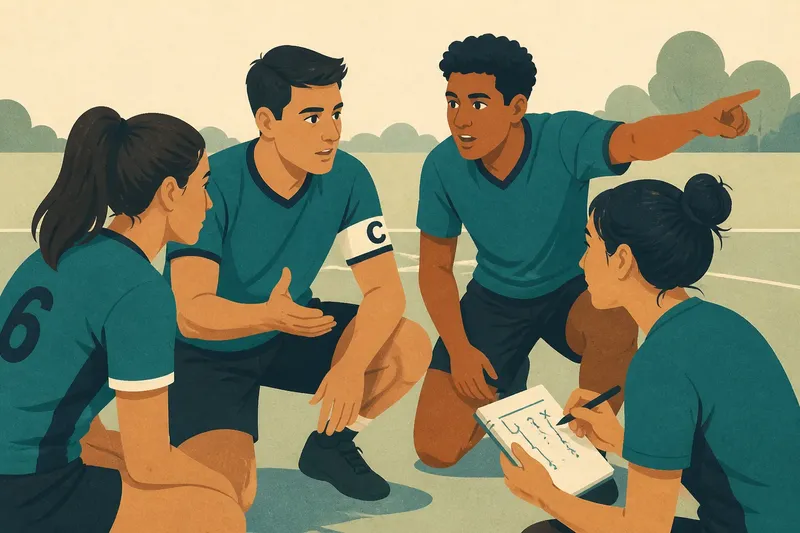
Who should speak up when your team loses its shape: the captain, the player nearest the action, or someone who keeps track of the group? Team communication works best when the person speaking matches the need in front of you.
These are not competing job titles. A captain can set a shared tone, a caller can address an immediate play, and a quiet organizer can clear up details before action starts. The question is not who gets to lead, but what kind of direction will help teammates act together.
The captain sets the tone
A captain gives the group a familiar point of reference. That does not mean narrating every play or making every decision. It means helping teammates stay connected to shared intentions: how they treat one another, what the group is trying to do, and how it responds when a play goes badly.
This role is useful when a team needs consistency across a session. A captain might remind players to rotate fairly, welcome someone new, or bring attention back to the agreed plan after a stretch of scattered play. A brief, calm message is often enough; the value lies in being ready to say it clearly without turning the moment into a lecture.
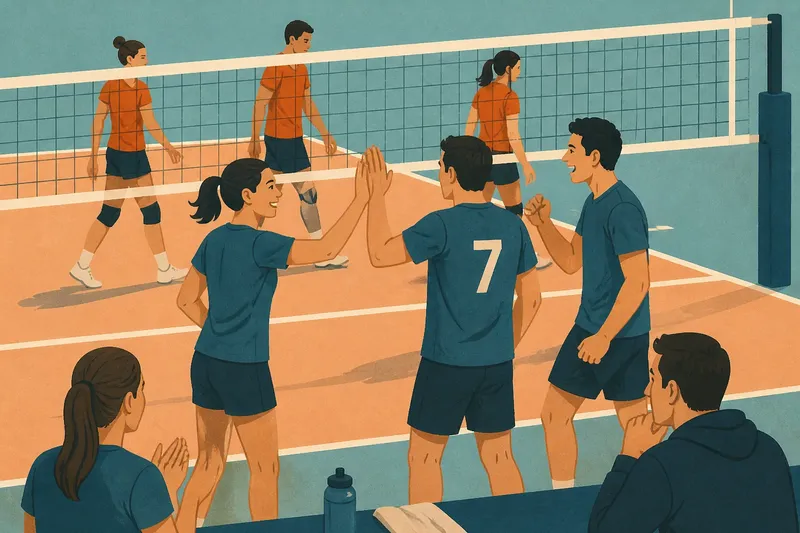
Formal authority is not essential. In a casual volleyball group, a captain might check that everyone understands the rotation and invite quieter players into the conversation. That is different from deciding who deserves the ball. The captain helps the team work together, while the team still shares responsibility for playing.
A captain-led arrangement can become awkward if teammates wait for one person to solve every uncertainty. Agree on the role’s limits: which decisions the captain handles, which belong to the group, and when a player closer to the action should make an immediate call.
The active caller reads play
An active caller speaks because they see or can act on something that needs attention now. Their authority comes from proximity and timing, not necessarily a formal title. In basketball, a defender might call out a screen; in doubles tennis, a partner might clearly say “yours” on a ball between players.
This kind of direction helps when a decision must happen faster than a group discussion allows. A call can identify an open teammate, warn of a moving opponent, or settle who will take a shared ball. It should give teammates information they can use. “Screen left” is more helpful than a string of vague shouts.
Teams can make active calling easier by agreeing on a small vocabulary before play. Choose phrases that are short, audible in the setting, and clear to everyone. If players use the same word to mean different things, the call can create hesitation instead of resolving it. Try the terms during an easy portion of practice, then adjust them if teammates keep asking what they mean.
There is a balance to strike. A caller who comments on every touch can crowd out useful information and leave teammates feeling managed. Ask whether the call changes a decision in time to help. If not, save the voice for a moment that needs a signal.
The quiet organizer prepares
Not all coordination needs to happen during a play. A quiet organizer notices gaps before they become live problems: players are unsure where to stand, substitutions are unclear, or teammates disagree about who covers a space. This person may not speak often during action, but can make the team easier to understand.
Quiet organization can suit someone who is observant and concise, including a player who does not enjoy being the loudest voice. They might clarify a basic division of responsibilities before a game, check who will handle the next substitution, or make sure a new teammate knows the group’s signals. The point is to remove avoidable uncertainty, not to design a complicated system.
Imagine a recreational soccer team where two defenders keep stepping toward the same opponent and a teammate is unsure what to cover. Before the next restart, one organizer suggests that a defender take the ball carrier while the other watches the nearby passing option. The expected observable result is that each player has a clearer first responsibility; teammates can then see whether the arrangement makes the next play easier to read.
Preparation has limits. A tidy plan can become a burden if it includes more instructions than players can remember. Keep the arrangement simple enough to explain in ordinary language, and leave room to respond to what players actually see. It is like labeling a few kitchen containers: a little order helps, while labels on every object make the room harder to use.
Match direction to need
These roles work best when they complement one another. The captain can establish expectations, the active caller can clarify an immediate play, and the quiet organizer can handle details that are easier to settle before action. One person may take more than one role, but the responsibilities remain distinct.
Use the problem in front of you to decide who should speak:
- Shared standards: If the issue is how teammates communicate, rotate, or include one another, then let the captain or group address it; if the captain is not present or the concern affects everyone, invite the whole group to agree on a standard.
- An urgent choice: If one player has the clearest view of an immediate play, then let that player make a short, specific call; if the message is not clear or audible, use a simpler agreed signal.
- Recurring confusion: If the same positioning or substitution question keeps coming up, then pause between plays and agree on a simple arrangement; if the plan is hard to remember, reduce it to one clear responsibility at a time.
- Disagreement about the plan: If the choice can wait, then discuss it during a pause rather than layering calls over action; if play is live, use the safest shared option the team already understands and revisit the issue afterward.
This distinction helps prevent a common habit: treating volume as authority. A loud voice is easy to hear, but it is not automatically the most relevant one. Useful direction is clear, timely, and connected to what teammates can do next.
Agree on role handoffs
Even a group with willing leaders can get tangled if nobody knows when a role changes hands. A captain might set the plan, but a player who spots an immediate opening should still be free to call it. A quiet organizer can identify a recurring issue without becoming the referee for every disagreement.
Before play, settle a few expectations together:
- If no one is handling introductions or rotations, then name a person to coordinate them; if the group already shares those tasks smoothly, keep them informal.
- If players use different words for the same play, then agree on one short call and its meaning; if the term remains confusing in practice, replace it with a clearer phrase.
- If an urgent play can arise for anyone, then let any player make the relevant call; if several voices compete, agree to favor the clearest call from the player nearest the action.
- If a concern needs more than a quick signal, then hold it for a pause; if waiting would leave someone confused about an immediate responsibility, clarify that responsibility briefly first.
- If the current arrangement keeps causing confusion, then invite the group to suggest a small change; if the change adds more rules than players can remember, simplify it.
These are conversation prompts, not rules every team must adopt. A group of familiar teammates may need little formal agreement. A mixed or newly formed team may benefit from saying expectations aloud, then checking whether they still make sense after playing together.
Keep feedback about the system rather than someone’s character. “We missed the screen call” points toward a fix; “You never communicate” turns a practical issue into a personal verdict. If a direction is hard to hear or understand, discuss a clearer phrase or a better moment to speak.
Choosing team direction
Does every team need a captain?
No. A captain can help with continuity, especially when someone needs to bring the group together or handle shared arrangements. A team can also distribute those tasks if everyone knows who is handling what.
Who should call during play?
The player with the clearest, most relevant information is often best placed to make an immediate call. Keep the message short, and let teammates respond to the play rather than wait for a designated speaker.
Can one person fill all three roles?
Yes, if that person can shift between setting expectations, making timely calls, and helping with preparation without taking over. Different teammates can also share those tasks as the situation changes.
What if teammates disagree about direction?
Separate urgent action from a discussion that can wait for a pause. Once play stops, describe the specific confusion, hear the relevant views, and agree on a simple next attempt instead of arguing over who has the right to lead.
Share direction well
Teams share direction most smoothly when the voice matches the need: a captain for shared standards, an active caller for a live decision, and a quiet organizer for clarity around the edges of play. None of these roles requires one person to own every answer.
In your next game, notice which moments create confusion. Then ask whether a clearer call, a little advance organization, or a steadier shared tone would help. That gives your team a practical place to begin and leaves room for direction to come from whoever can help in the moment.